May 12th, 2026 • Spring in The Bay Area
Spring 2026 Real Estate: The Market That’s Making Everyone Pause

That change can feel odd at first. It might stir up questions like “Is now the right time?” or “Should I wait?” But for many, this quieter rhythm is opening a door. It’s a chance to step back from the noise, really understand your options, and move forward with calm confidence.
A slower market isn’t necessarily a weak one — sometimes it’s simply a kinder, more thoughtful one.
That change can feel odd at first. It might stir up questions like “Is now the right time?” or “Should I wait?” But for many, this quieter rhythm is opening a door. It’s a chance to step back from the noise, really understand your options, and move forward with calm confidence.
A slower market isn’t necessarily a weak one — sometimes it’s simply a kinder, more thoughtful one.
Market Update
Sarah’s snapshot of where the Bay Area real estate market stands right now:
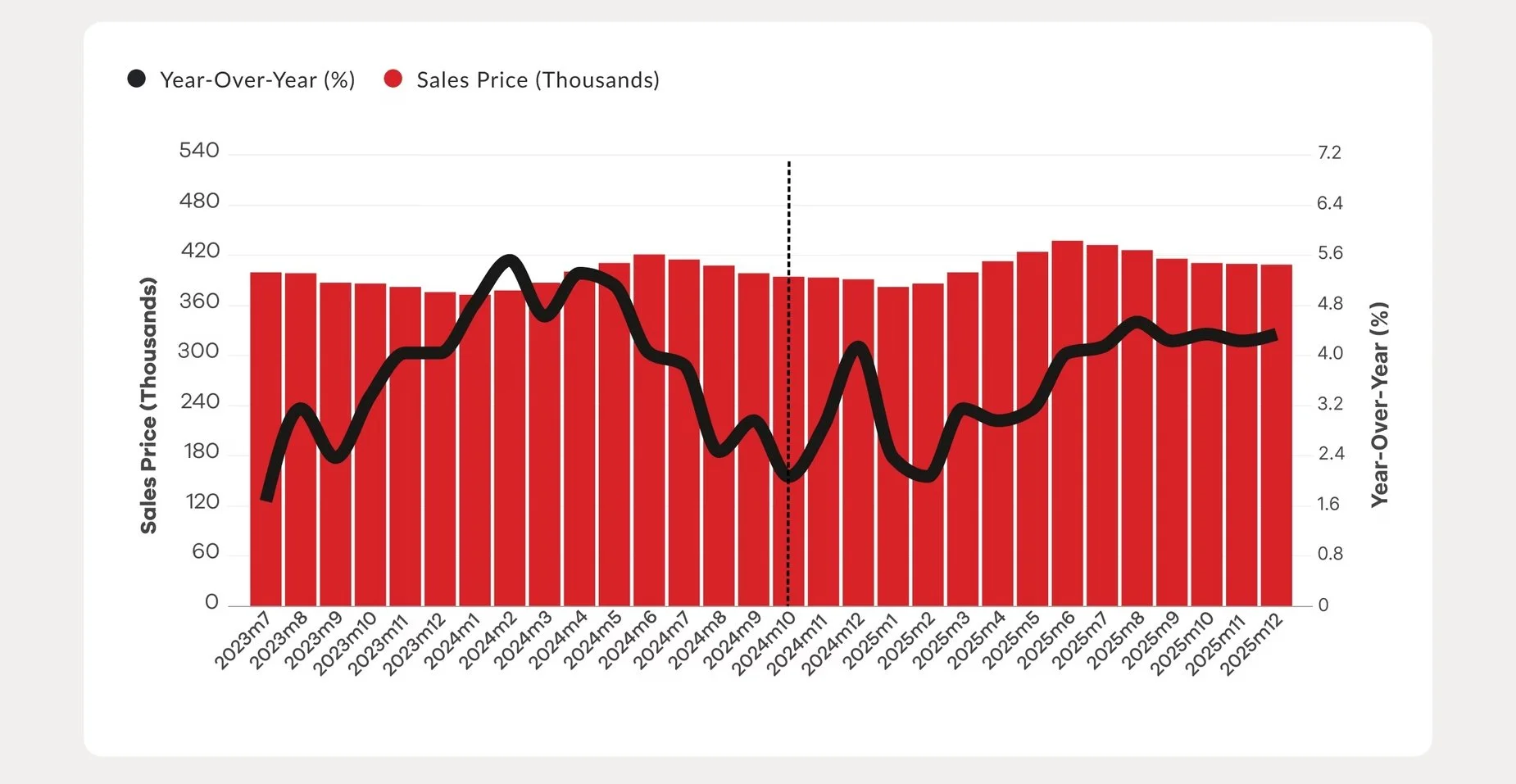
Prices & Sales The Bay Area's median home price reached $1,285,000 in February 2026 — a 14% jump from January and a 2.8% gain year-over-year. Home sales surged 44.1% month-over-month and 4% year-over-year. Overall, Bay Area sales rose 2.5% year-over-year, with standout growth in San Francisco (up 11.5%), San Mateo County (up 15.5%), and Alameda County (up 10.5%).
Inventory remains tight — the Bay Area's Unsold Inventory Index sits at just 2.2 months, well below the statewide figure of 3.2 months. Many homeowners with low existing interest rates are still reluctant to sell, keeping supply restricted.
Mortgage Rates Mortgage rates averaged 6.05% in early 2026 — a welcome improvement from 6.84% a year prior — which has helped re-energize buyer activity
East Bay, specifically East Bay counties like Alameda and Contra Costa are attracting buyers seeking more space with relatively accessible median prices. However, Contra Costa saw some softness, while Napa saw a significant 17.8% year-over-year price decline with 105 average days on market.
The Outlook Analysts project Bay Area home prices will continue rising 2–6% in 2026, reflecting tight supply and resilient demand. The overall picture is less of a rollercoaster and more a return to rationality — a cooldown with potential for a gentle comeback, where local expertise and data-driven strategy matter more than ever.
The bottom line: it's still a competitive, supply-constrained market — but one that's becoming more navigable for buyers and still rewarding for well-prepared sellers. Would you like me to format this as a market update section for Sarah's website?
Why the Bay Area Feels Slower Right Now
Building on the impact of interest rates, it becomes easier to understand why the Bay Area market feels more measured right now.
Real estate has always operated at the intersection of economics and human behavior. While financial conditions set the framework, it is often sentiment that determines the pace of the market. Today, that sentiment leans more toward caution and intentionality than urgency.
Several underlying factors are contributing to this shift. Ongoing adjustments within the tech sector, including layoffs, have introduced a layer of uncertainty in a region deeply connected to that industry. Even among those not directly affected, the broader impact is influencing decision-making. Large financial commitments are being approached with greater scrutiny, and timelines that once felt urgent are now being reconsidered.
At the same time, the cost of homeownership is being evaluated more holistically. Rising insurance premiums have added a new dimension to affordability. Buyers are no longer focused solely on mortgage rates and purchase prices. They are assessing the full financial picture, from monthly obligations to long-term sustainability, and that broader lens naturally slows the pace of decision-making.
Alongside these economic considerations, there is a noticeable shift in mindset. The market is moving away from reactive decisions toward more deliberate ones. Buyers are taking the time to align their purchases not just with their budgets, but with their long-term goals and lifestyle needs.
The question is no longer limited to what is financially feasible. Increasingly, it is about whether a decision feels sustainable, appropriate, and well-timed within a broader life context.
This more thoughtful approach does not signal weakness in the market. Rather, it reflects a period of recalibration, where clarity and confidence are becoming just as important as opportunity
A Generational Shift You Might Not Expect
A quieter but powerful shift is shaping today’s market: baby boomers are now the largest group of buyers and sellers, and their financial flexibility is changing how transactions play out. Years of homeownership have given many boomers substantial equity, allowing for larger down payments or all-cash offers. Meanwhile, millennials face higher prices, borrowing costs, and tighter inventory, making timing and affordability more challenging.
The result is a more segmented market — equity-driven buyers alongside financing-dependent buyers — and more intentional, strategic decision-making from all sides. For guidance on how this affects your goals, call Sarah to connect with her and ask any questions.